
Ottawa Public Health (OPH), Ottawa Police Service, and the Overdose Prevention and Response Taskforce are issuing an alert to warn residents about an increased risk of overdose related to the toxicity of the unregulated drug supply.
This week, Health Canada detected a highly toxic drug called protonitazepyne in counterfeit pills circulating in Ottawa. This drug is part of a class of drugs referred to as Nitazene↗ opioids.
Protonitazepyne is a toxic synthetic opioid about 25 times stronger than fentanyl and over 350 times stronger than morphine.
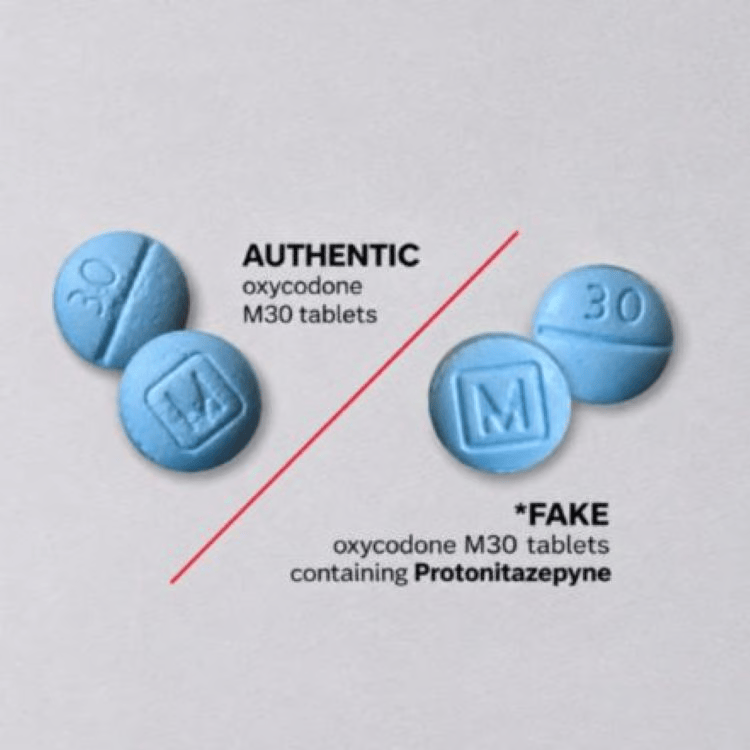
Locally, the drug was found in counterfeit blue pills with the stamping “M30,” which closely resembles real prescription oxycodone tablets. These pills pose a significant risk of fatal overdose. Picture above
Authentic M30 30mg immediate-release oxycodone tablets are a U.S-marketed product that is not prescribed in Canada or authorized for sale by Health Canada.
Anyone seeing these pills circulating in the Ottawa drug supply should assume that they may contain highly toxic substances and pose an increased risk of overdose.
Nitazenes significantly increase the risk of overdose and fatal respiratory depression (slow or stopped breathing). Overdoses involving nitazenes may be difficult to treat and more doses of naloxone than usual may be required to help individuals experiencing an overdose.
How to respond to an overdose:
In all cases of suspected overdose, call 9-1-1 right away for emergency help.
Give naloxone if you have it↗. Naloxone can temporarily reverse the effects of an opioid overdose and can be safely given to people who have taken non-opioid drugs.
Perform chest compressions and/or rescue breathing, or CPR as needed.
Give a repeat dose of naloxone every 2-3 minutes until the person responds or first responders arrive.
Stay with the person until emergency help arrives. The Good Samaritan Drug Overdose Act↗ provides some legal protection for people seeking emergency support during an overdose.
Individuals who use drugs are reminded:
Carry naloxone – Naloxone is a medication that can temporarily reverse the effects of an opioid overdose. Naloxone kits are available at no cost in Ontario. Please visit StopOverdoseOttawa.ca↗ to find out how to get a naloxone kit.
Always use naloxone if you think someone is overdosing; while naloxone will not have an effect on non-opioid substances, it can temporarily reverse the effects of any opioids that are also likely present.
Don’t use alone – A buddy system is safer than using alone. If you are using with someone else, don’t use at the exact same time.
If you do use alone – Tell someone before you use. Have a safety plan which includes having someone come check on you. You can also call the National Overdose Prevention Line↗ at 1-888-688-NORS (6677) or connect with an anonymous virtual harm reduction supporter via the Brave App↗.
Get your drugs checked before using – Walk-in drug checking services are available at Sandy Hill Community Health Centre↗.
Don’t mix drugs – Using more than one drug at a time puts you at a higher risk of overdose.
Know your tolerance – Your risk of overdose increases if you are a new user or haven't used in more than three days.
Go slow – The toxicity of unregulated drugs is unpredictable.
If you have a friend or family member who uses drugs, you are encouraged to:
Know the signs of an overdose↗ and call 9-1-1 immediately if you witness an overdose.
Carry naloxone↗ – a medication that can temporarily reverse an opioid overdose.
Resources
Subscribe to Stop Overdose Ottawa Alerts. Stay up to date on the toxic drug supply and be notified by email when there is an increased risk of overdose. Members of the public can sign up by visiting StopOverdoseOttawa.ca↗.
Visit StopOverdoseOttawa.ca↗ to learn more about overdose prevention and harm reduction services in Ottawa. You can also connect with us through Facebook↗, Bluesky↗, LinkedIn↗, and Instagram↗.