

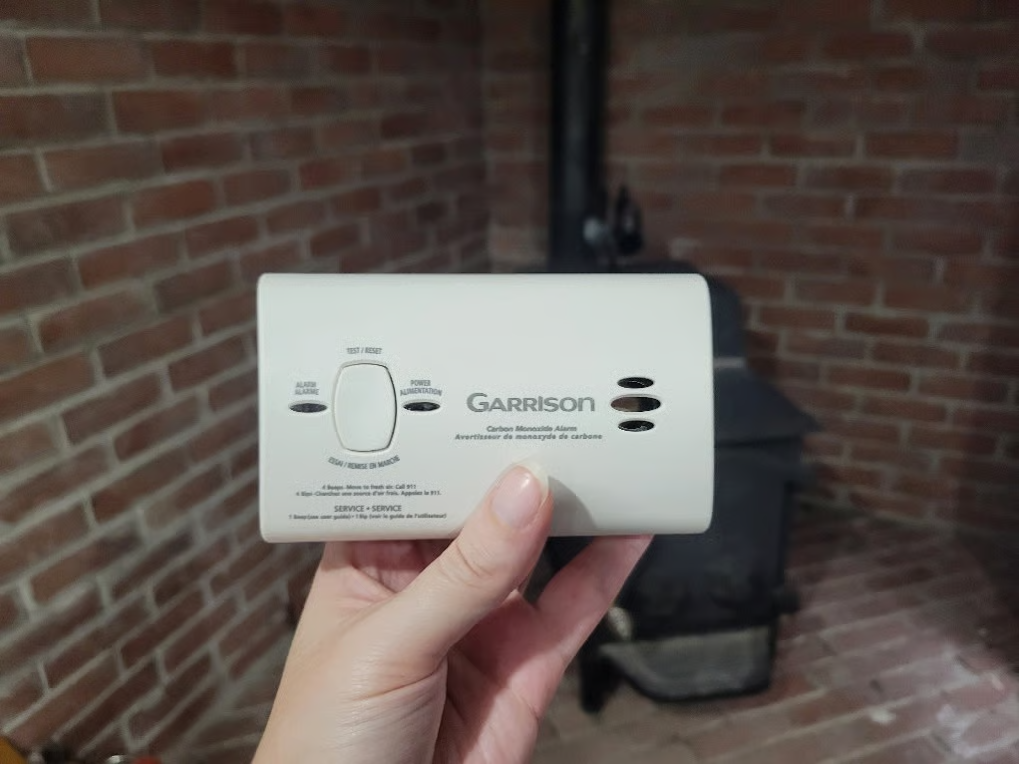
Carbon monoxide (CO) is an invisible, odourless gas created by the incomplete combustion of fuels like wood, gas, oil or propane. When inhaled at high concentrations, CO can be deadly.
A working CO alarm is the only reliable way to know when there are dangerous levels of CO in your home.
Who needs a carbon monoxide alarm?
Ontario’s Building Code↗ and Fire Code↗ regulate which residences require CO alarms and, if required, where they must be located in your home.
As of January 1, 2026, residential buildings must have working CO alarms if they have:
An attached garage
A woodburning fireplace
A fuel-burning appliance, such as a gas stove, gas water heater, or gas fireplace
An outdoor furnace which supplies heated air directly into the residence
This applies to detached houses, townhouses, apartments and condos.
Where to locate carbon monoxides alarms
Residential homes
In detached homes and townhouses where CO alarms are required, install a CO alarm:
On every level of the home, including basements and finished attics or lofts
Beside each sleeping room, typically in the hallway outside of the bedroom(s)
For example, in a two-storey house with an attached garage and bedrooms located in the basement and on the second floor, a CO alarm would be required on the first floor and in the hallways adjacent to the basement and second floor bedrooms.
This PDF guide can help homeowners identify where to install CO alarms in a house↗.
Residential high-rises
If the building has an attached parking garage, fuel-fire appliances or fireplaces, CO alarms are required and must be installed at the locations listed below.
Apartment and condo buildings with an attached parking garage must install CO alarms immediately outside of the sleeping room of a suite or individual apartment unit that shares a wall, floor, or ceiling with the garage.
Apartment and condo buildings with a fuel-fired appliance, other than a forced-air fuel-burning furnace, must install CO alarms:
In the service room where the fuel-burning appliance is installed, and
In suites that share a wall, floor, or ceiling with the room that the appliance is in and immediately outside of the sleeping rooms in the suite.
Apartment and condo buildings with a forced-air fuel-burning furnace must install CO alarms:
In the service room where the forced-air fuel-burning appliance is installed,
Inside a suite, immediately outside of the sleeping rooms, if the suite if it is directly heated by the forced-air fuel-burning appliance, and
In shared, public hallways that are directly heated by the forced-air fuel-burning appliance:
Install at least one CO alarm in each portion of a divided hallway, and
Space each CO alarm in an undivided portion of the hallway no more than 25 meters apart.
For example, in a one-bedroom condo with a gas fireplace in the living room, a CO alarm would be installed immediately outside the bedroom.
This PDF guide can help landlords identify where to install CO alarms in an apartment or condo building↗.
Carbon monoxide alarm testing and replacement
Just like smoke alarms, CO alarms don’t last forever and require monthly testing and regular replacement.
At home, you must make sure that your CO alarms are working. The best practice is to:
Once a month, push the “Test” button to make sure the alarm is working,
Once a year, replace the batteries to make sure your home has continuous protection, and
Once every seven to 10 years, or as instructed by the manufacturer, replace the CO alarm.
In a rental, your landlord must make sure that there are working CO alarms in the units. Renters should:
Test the alarms in their unit once a month.
Report any issues with the alarms to their landlord immediately.
Visit Ottawa Fire Services’ Fire safety, prevention and education↗ page for more information on smoke and carbon monoxide alarms. You can also follow along on a home inspection with fire prevention officers on a recent episode of OttaTalk↗.